There’s something instantly familiar about a Korean soju table. Green bottles lined up. Clear shot glasses catching the light. Laughter that gets louder as the night stretches on. For many Koreans, it’s second nature. For newcomers, one thing becomes clear very quickly: everyone seems to know exactly what to do.
No one explains it. There’s no rulebook. Yet whether you’re in Seoul, Busan, or anywhere in between, the rhythm feels the same. People move in sync, following a flow that’s quietly understood.
That’s Korean soju culture. The drink sits at the center, gently bringing people together.
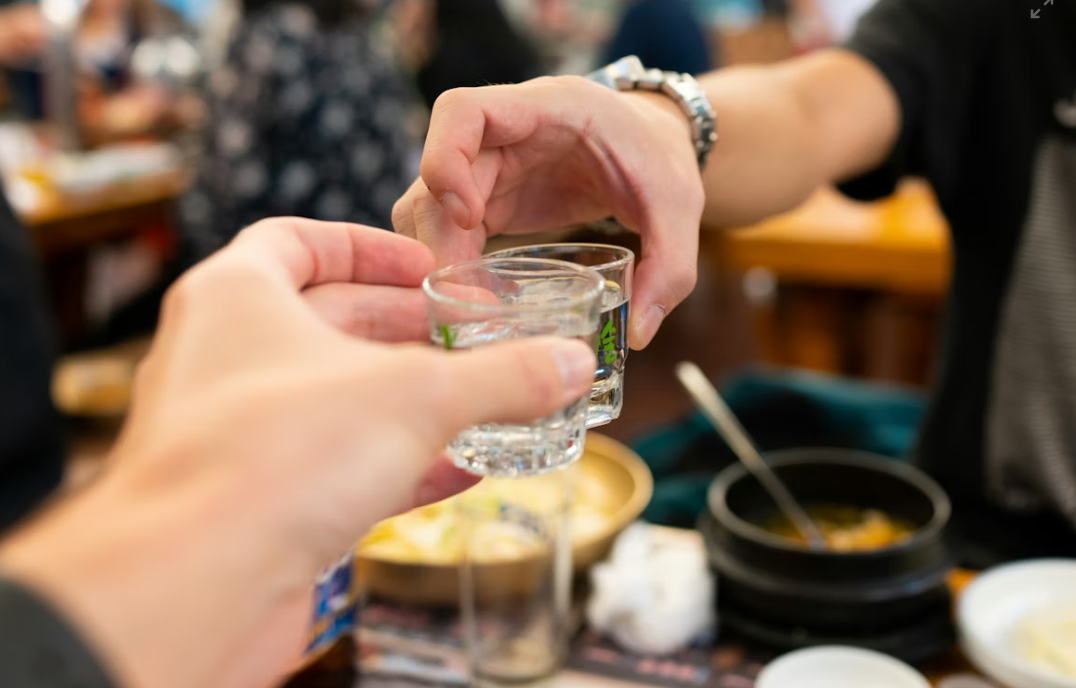
The glasses are filled. Someone lifts theirs. The rest follow. Eyes meet. Someone calls out “geonbae” (건배) or “zzan” (짠). Glasses touch. Then everyone drinks.
That first clink matters. It signals the beginning of the night, turning separate drinks into a shared moment. Skip it, and the table feels slightly off, like starting a celebration before everyone’s ready.
The toast sets the mood. From that point on, the table moves as one. What starts as a simple gesture becomes an invitation to settle in and enjoy the time together.
Half-filled glasses don’t linger for long.
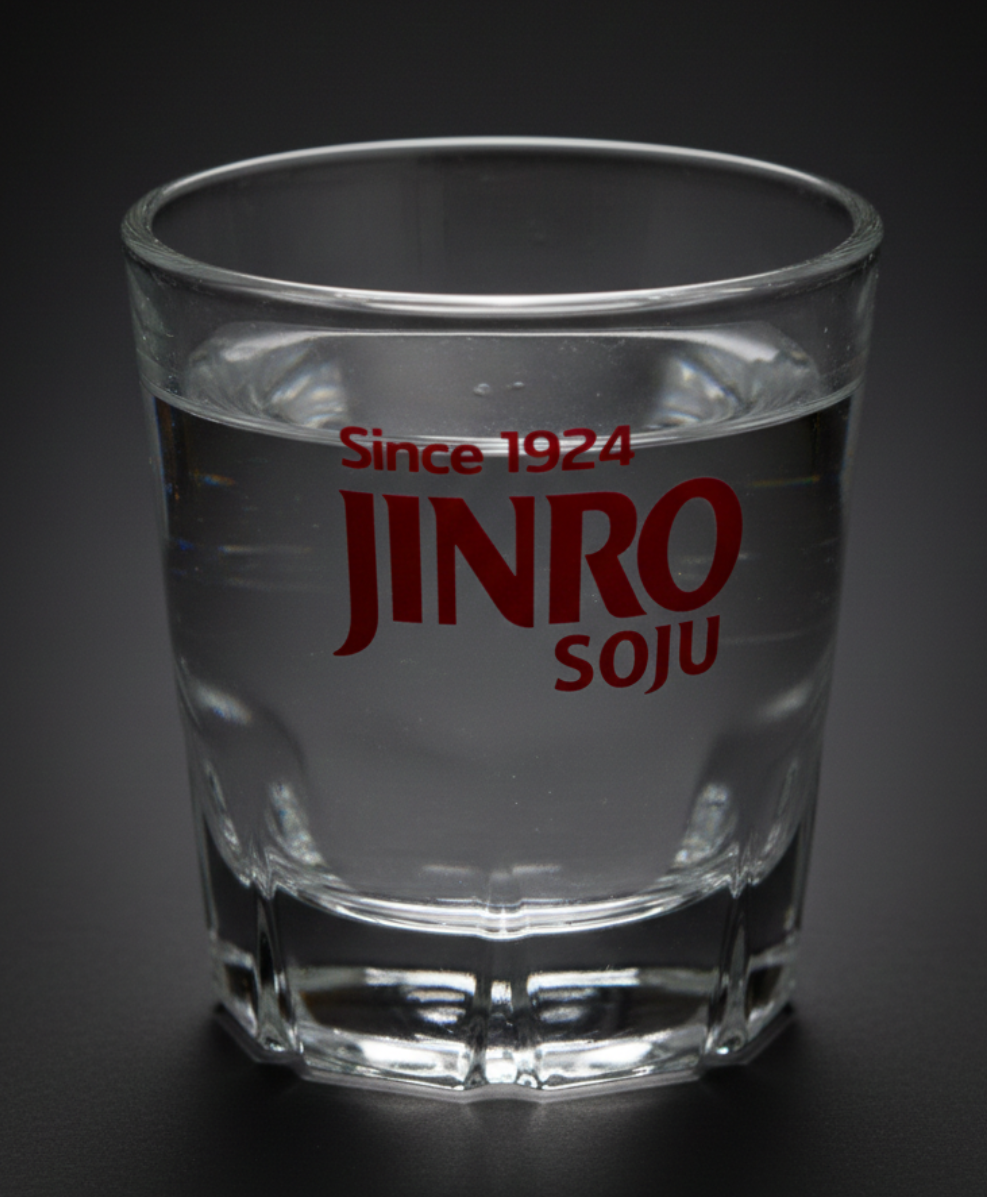
The flow is easy to follow. Someone pours. You accept. You finish the glass. It’s not rushed, and it’s not about drinking more than you want. It’s about completing the exchange.
Pouring a drink carries intention. Finishing it acknowledges that care. The glass becomes part of a quiet back-and-forth, one that keeps the evening moving naturally.
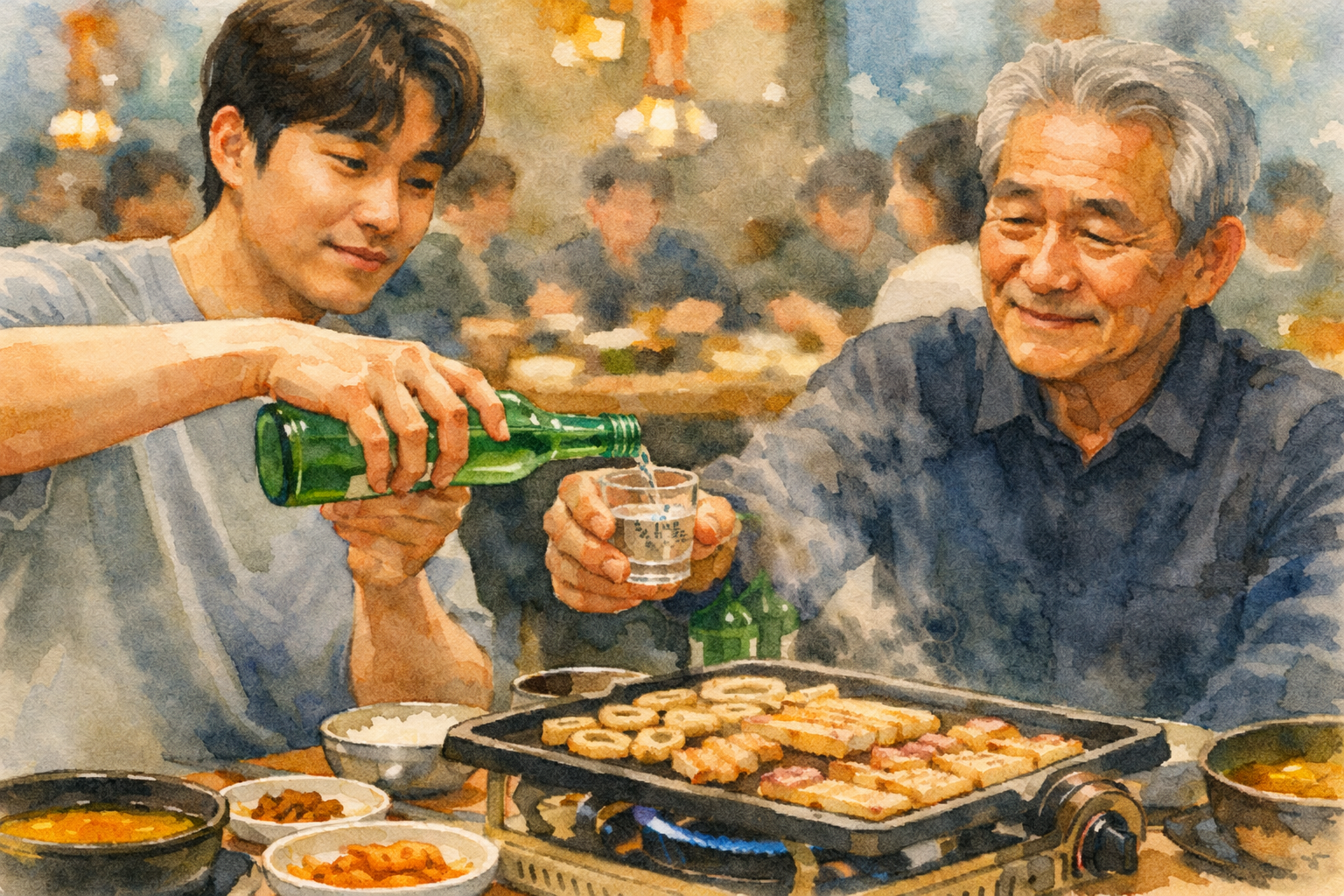
At a Korean table, age and seniority guide behavior in subtle but meaningful ways. One of the most visible signs of respect is what happens after the pour.
When drinking in the presence of someone older or more senior, it's customary to turn your head slightly to the side, away from them, as you take your sip. It's a small gesture that acknowledges the hierarchy while keeping the moment relaxed and natural.
Not everyone drinks, and that’s understood.
If someone passes on alcohol—for health reasons, personal choice, or anything else—it’s accepted without comment. They’re still part of the table, still included in toasts, often raising a glass of water or another drink instead.
What matters is the presence. The table stays welcoming, and the conversation keeps flowing.
If you watch closely, you’ll notice something else. Empty glasses don’t stay empty for long.
Someone nearby notices and refills it, often without a word. There’s no announcement, no pause in conversation. Sometimes you only realize it when you pick your glass back up.
This quiet attentiveness runs through the entire evening. It’s a steady awareness of one another, expressed through simple actions rather than words.
Disclaimer: This content is intended for readers of legal drinking age. We celebrate JINRO Soju’s cultural significance in Korean entertainment and global nightlife while promoting responsible enjoyment. Please drink in moderation and never drink and drive.
Discover more about JINRO and its wide range of products on JINRO official social media: Instagram, Facebook, Youtube, TikTok.